
BUTT FUSION · ELECTROFUSION · SITE TOOLS
Polyethylene pipe welding machines
Welding machines were the first thing we built when we started in Istanbul in 1995. Today the range runs from hand tools to butt fusion machines for Ø 1600 mm mains, all made in our own plant.
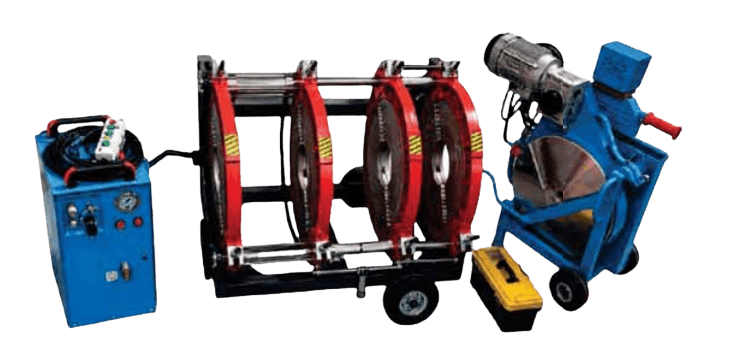
Polyethylene Pipe Butt Welding Machines
AL and ALW series hydraulic butt fusion machines for PE and PP pipe up to Ø 1600 mm, with CNC versions that calculate the weld and print the report.
View range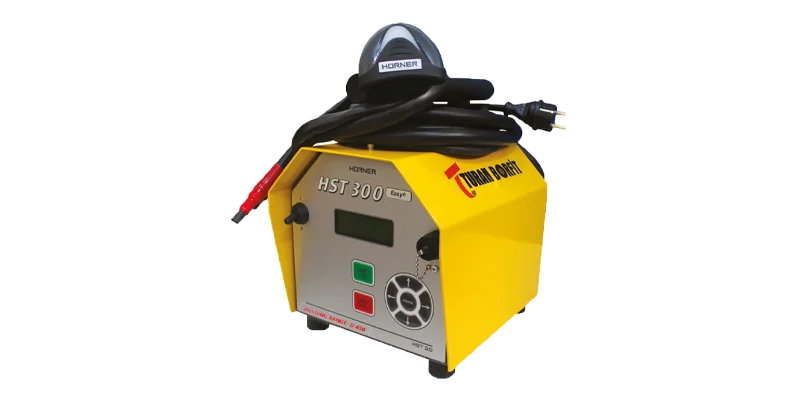
Electrofusion Welding Machines
Control units for electrofusion fittings from Ø 20 to Ø 1600 mm, with barcode input and weld memory of up to 4,000 records.
View range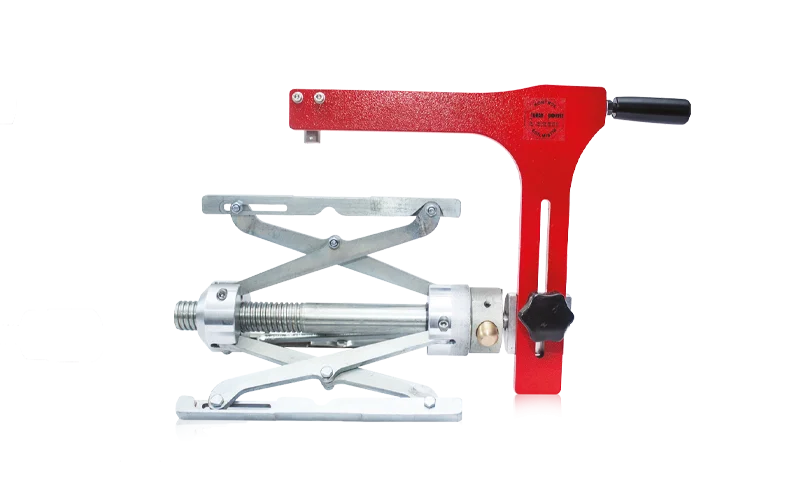
Professional Welding Apparatus
Manual extruder welders, a pipe saw for up to Ø 2200 mm, RASPA scrapers, ovality clamps and PE 100 welding rod.
View rangeButt fusion or electrofusion?
Both methods give a permanent, leak-free joint when they are done properly. They differ in cost, equipment and how forgiving they are on site.
Visibility
Butt welds are visible and can be redone on the spot; EF welds hide inside the socket and need experienced welders.
Hard to reach places
EF wins: tiny machine, cable tip electrodes. Works above ground, in pits, anywhere.
Simplicity
Butt welding forgives workmanship errors; EF has zero tolerance and fails only at pressure test.
Material conditions
EF demands matching MFI, round pipes, clean surfaces, stable voltage; butt is unaffected by these.
Cost
Butt is far cheaper: no copper wire sockets every 6/12 m.
Strength
A correct butt weld is the strongest point of the line (the 'lip' adds wall thickness).
Butt welding machines by pipe size
| Machine | Pipe range | Power |
|---|---|---|
| AL 160 MW | Ø 63 – Ø 160 mm | Single phase |
| AL 160 W | Ø 63 – Ø 160 mm | Single phase |
| ALH 160 CNC | Ø 63 – Ø 160 mm | Single phase |
| ALHM 160 | Ø 63 – Ø 160 mm | Single phase |
| ALW 160A | Ø 63 – Ø 160 mm | Single phase |
| ALW 250A | Ø 63 – Ø 250 mm | Single phase |
| AL 250 CNC | Ø 75 – Ø 250 mm | Single phase |
| AL 315 CNC | Ø 90 – Ø 315 mm | Single phase |
| ALW 315A | Ø 90 – Ø 315 mm | Single phase |
| AL 500 CNC | Ø 180 – Ø 500 mm | Triple phase |
| ALW 400A | Ø 180 – Ø 400 mm | Triple phase |
| ALW 500A | Ø 180 – Ø 500 mm | Triple phase |
| AL 630 CNC | Ø 315 – Ø 630 mm | Triple phase |
| ALW 630A | Ø 315 – Ø 630 mm | 380 V / 50 Hz, 1PH |
| ALW 800A | Ø 450 – Ø 800 mm | Triple phase |
| AL 800 CNC | Ø 500 – Ø 800 mm | Triple phase |
| AL 1000 CNC | Ø 710 – Ø 1000 mm | Triple phase |
| AL 1200 CNC | Ø 800 – Ø 1200 mm | Triple phase |
| ALW 1200A | Ø 800 – Ø 1200 mm | Triple phase |
| ALW 1600A | Ø 1000 – Ø 1600 mm | Triple phase |
Hydraulic or CNC?
On a standard hydraulic machine the operator reads the welding pressures and times from a table and controls each stage of the weld. On a CNC machine you enter the pipe diameter and wall thickness, and the controller does the calculation, runs the cycle and stores the result: up to 500 welds in memory, with an original report for each joint. CNC costs more, but it takes the calculation out of the operator's hands.
FAQ
Frequently asked questions
Which machine do I need for Ø 315 mm pipe?
For butt fusion, the AL 315, AL 315 CNC or ALW 315A, all of which run on single-phase power. For electrofusion, the HST 300 EASY D 2.0 (up to Ø 450 mm) or any larger unit.
What is the difference between the AL and ALW series?
The ALW A series is the newer generation, built on the AL platform with an updated hydraulic unit, refined controls and extended welding ranges up to Ø 1600 mm.
Do your machines weld PP pipe?
Yes. Our butt welding machines and the manual extruder weld both PE and PP, and the HCU, HST and W electrofusion units also weld PP and PVDF fittings.
Are user manuals available?
Yes. Manuals for the AL butt welding series and the AL / ALH / ALD 160 are on the Resources page, and we send other documents on request.